We're So Screwed
A digestible timeline of the end of the Solar System.
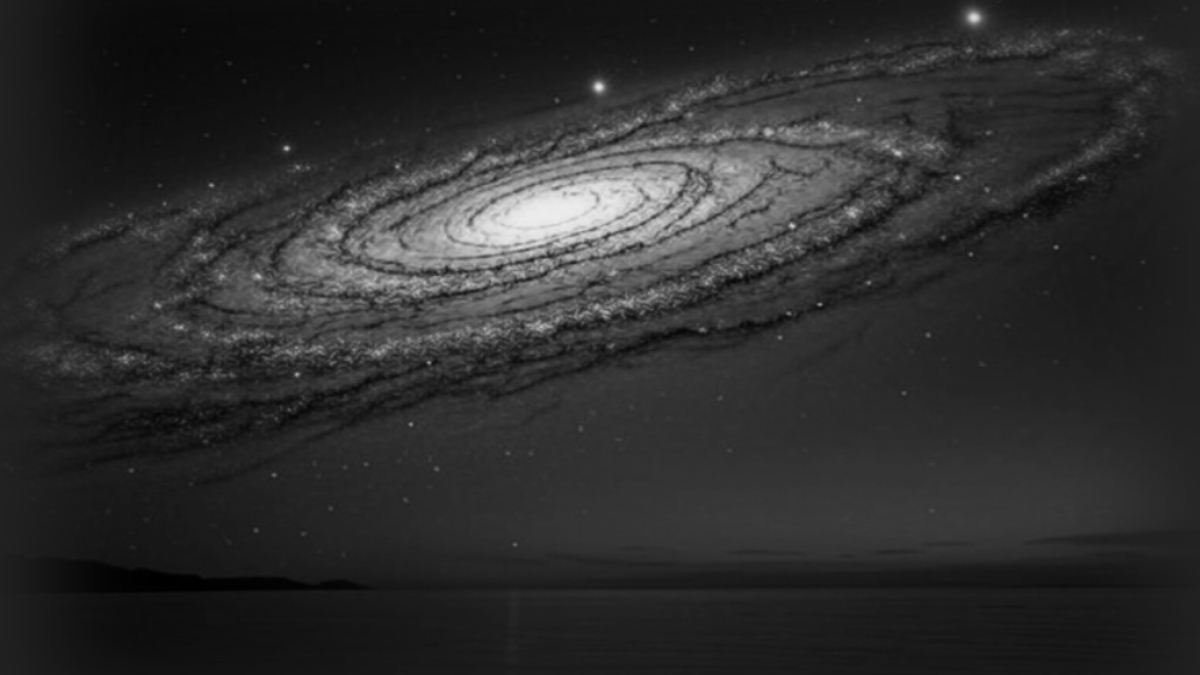
Fun fact: humanity and the planet will come to an end. Horribly. Science warns us that the Earth won’t keep on going round the sun in its wobbly orbit forever. The Earth, and everything on it, will perish. This is not conjecture. It is inevitable.
To understand how royally screwed we are, the cosmic calendar needs to be shrunk into manageable, bite-sized chunks. Let’s try this: imagine that one normal year is equivalent to one billion years. Squash one-thousand-million years into one normal year or, if you like, let’s speed up time so that it gets through nearly three million years every day.
Now let’s look at what happens next year, or in one billion years on our new time scale. By about this time next year, the Sun will get 10% brighter. “So?” you ask, “What’s 10% between friends?” Well, actually, 10% brighter translates into quite a lot when it comes to the surface temperature of the Earth. A 10% increase in the brightness of the Sun will make life on Earth extremely uncomfortable, if not impossible. It’ll be like living in a sauna all year round. Mark it on your year planner: this time next year, sauna with mates.
Over the next two to three years (or two to three billion years), the Sun will get bigger and bigger, and in about four years, the Earth and everything on it will be roasted, toasted and burnt to a crisp. The Sun will have become so big that it will have engulfed the orbits of Mercury, Venus and, sadly, maybe even the Earth. Mars might be spared, though.
In about five years from now, our Milky Way galaxy will be crashed into by the bigger Andromeda galaxy which is barrelling towards us with no brakes. Out of the wreck, a new spiral galaxy will be formed. Some have called this new galaxy Milkomeda. It is almost certain that the collision between the Andromeda galaxy and our Milky Way may well rip our tiny solar system apart flinging its bits and pieces far into interstellar space, gone for ever.
But let’s say we hit a bit of intergalactic luck and our little solar system miraculously survives intact in the new Milkomeda galaxy. Three to four years after the collision (or seven to eight years from now), the Sun will shrink to a tiny, white dwarf star. It will twinkle very brightly for a few days and then, like a candle, it’ll spit and sputter for a bit and just go out. Puff. And that will be that. Permanent loadshedding.
So, there you have it. If one normal year was a billion years, no matter which way we spin it, we’re screwed in the coming decade.
Cosmic Calendar
One year = 1 billion years.
Year 1 (1 billion years from now)
The Sun’s luminosity increases ~10%, turning Earth into a steamy sauna. Oceans start evaporating, and life even at the poles becomes a sweaty struggle.
Years 2–4
The Sun keeps swelling, growing hotter and brighter. Earth’s surface becomes a scorching desert.
Year 5
The Milky Way and Andromeda galaxies collide, forming Milkomeda. The Solar System might survive, but gravitational chaos could fling us into the cosmic void. The Sun keeps ballooning into a red giant, engulfing Mercury and Venus. Earth’s fate is iffy: either engulfed or roasted to a crisp.
Years 7–8
The Sun shrinks into a tiny white dwarf, twinkling brightly before going out.
Year 10
There won’t be much left of our Solar System in ten years, just a few cold, dark rocks drifting aimlessly about in space.