How Fast Does Your Washing Machine Go...
...And What's Its Stopping Distance?
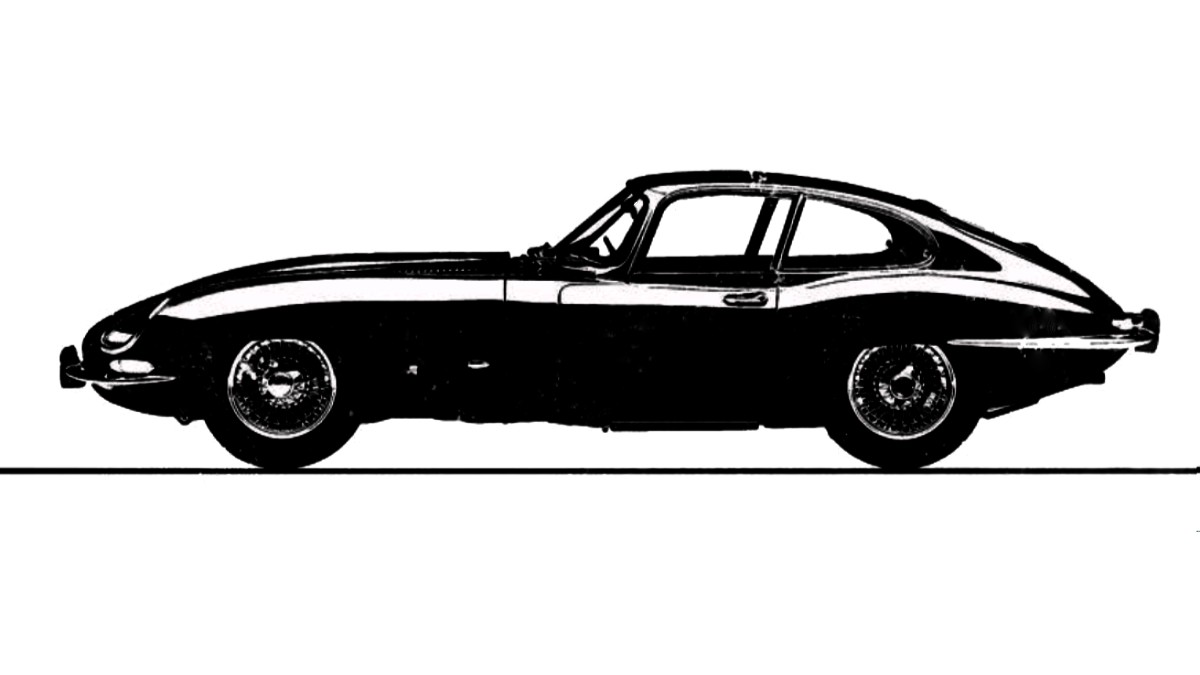
This morning, as I waited for the kettle to boil for my morning coffee, I watched my washing machine spinning at top speed on its final spin cycle. The dial says it spins at 1400 revolutions per minute (rpm). That got me thinking, 1400 rpm is only a pip above normal idling for most car engines, yet my poor washing machine looked like it was straining at the seams and going flat out…more like a wheel on a racing car than an engine waiting patiently at the lights. I asked myself, “If that spinning drum were a wheel, how fast would the car be going?” And I asked myself why on earth do washing machine manufacturers use boring rpm instead of an exciting and better known ‘km/h’? I think it would be just brilliant if Samsung had advertised it as: “This washing machine goes at 150 kilometers per hour! Like the E-Type!”
So, how fast was my washing machine actually going? Was it 150 km/h? Could I even calculate it? Did I have enough information and maths skill? Well, I knew that I would have to use ‘pi’ because the drum, like a wheel, is a circle, and I knew that I needed a ruler to measure the width of the spinning drum. The drum is about 50 cm wide, or half a meter. So, pi times the diameter of the drum would give me the ‘length’ of the edge of the drum, or its circumference:
3.142 (pi) x 0.5 m (diameter of drum) = 1.57 m
Since the drum is spinning at 1400 rpm, and each ‘rev’ is 1.57 m, then the distance covered in one minute is simply:
1400 (rpm) x 1.57 m (edge of drum) = 2200 m, or 2.2 km, each minute.
Since we need km per hour not per minute, simply multiply by 60 ‘cos there’s 60 min in 1 hour:
2.2 km per minute x 60 minutes = 132 km/h
And there you have it! My Samsung washing machine’s top speed is 132 kilometers per hour! Not quite E-Type territory but, still, wow! Not too shabby, Samsung!
Then the washing machine clicked off top speed and decelerated. I timed it. It took exactly one minute to go from top speed to a standstill; and I wondered how far that was. What was my washing machine’s stopping distance if it were a car? At first, I wasn’t sure that I could answer that one, but then I remembered that if the ‘slowing down’ was at a constant rate (and not jerky or under increased braking), I could use a very simple average to calculate its stopping distance:
132 km/h at top speed all the way to 0 km/h at the end, means the average speed during deceleration is 132 / 2 = 66 km/h
Since it took 1 minute to get to zero, I can calculate the stopping distance by converting the average of 66 km per hour back to km per minute by simply dividing by 60 ‘cos there’s 60 minutes in an hour:
66 km/h divided by 60 = 1.1 km per minute.
And there it is! My washing machine has a stopping distance of just over a kilometer, which, by the way, would be really bad if it were a car! Mind you, I think the E-Type’s original brakes weren’t much better!
So, what’s the lesson? What’s the message? What do we learn from this little interlude during which my coffee went cold?
Grok (xAI) told me that Socrates said, “Wisdom begins in wonder,” (or something like that) and that it was Richard Feynman who, in 1981, famously said, “I would rather have questions that can’t be answered than answers that can’t be questioned.”
I’m no scientist or mathematician or even a philosopher, come to that, but for a minute there, I was! I did something this morning that they all do. I looked at the world in a different way and I asked the question, “What if…?” I urge you parents to do the same, and to encourage your children to do so, too. Encourage them to see the world differently. There is no such thing as a stupid question. There are only stupid answers. So, let your children ask in wonder. Let them ask questions, and let them question answers. Just because you might not know the answer to their question doesn’t mean there isn’t one.